
Monday – Friday, 8:30am – 5pm
Start your career in the electrical industry, gain hands on experience on real worksites, and progress through a clear, nationally recognised training pathway with EarnLearn supporting your training, assessments, and wellbeing.
Why choose an electrical apprenticeship?
Earning while you learn lets you build skills on the job while continuing to earn an income. Apprentices gain practical experience, complete structured training, and work toward a recognised qualification with ongoing support. The result is financial stability, real skills, and strong future career options.
A clear pathway that combines real electrical work, structured training, and ongoing support.
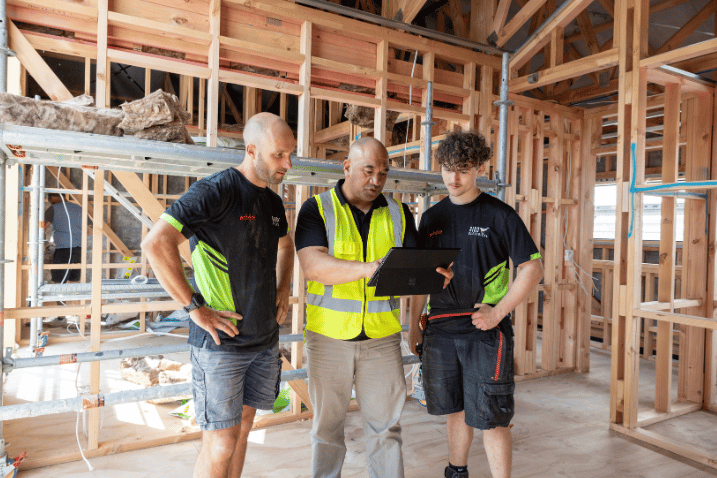
Most of your learning happens at work. You’ll train under the supervision of registered electricians who show you how tasks are carried out, explain why work is done a certain way, and ensure safe electrical practices are followed at all times.
As your skills and confidence grow, you’ll take on more responsibility across different types of electrical work, environments, and systems.
You’ll keep a record of the work you complete through on job evidence and workbooks. This evidence shows what you’ve learned and forms the basis of your assessments.
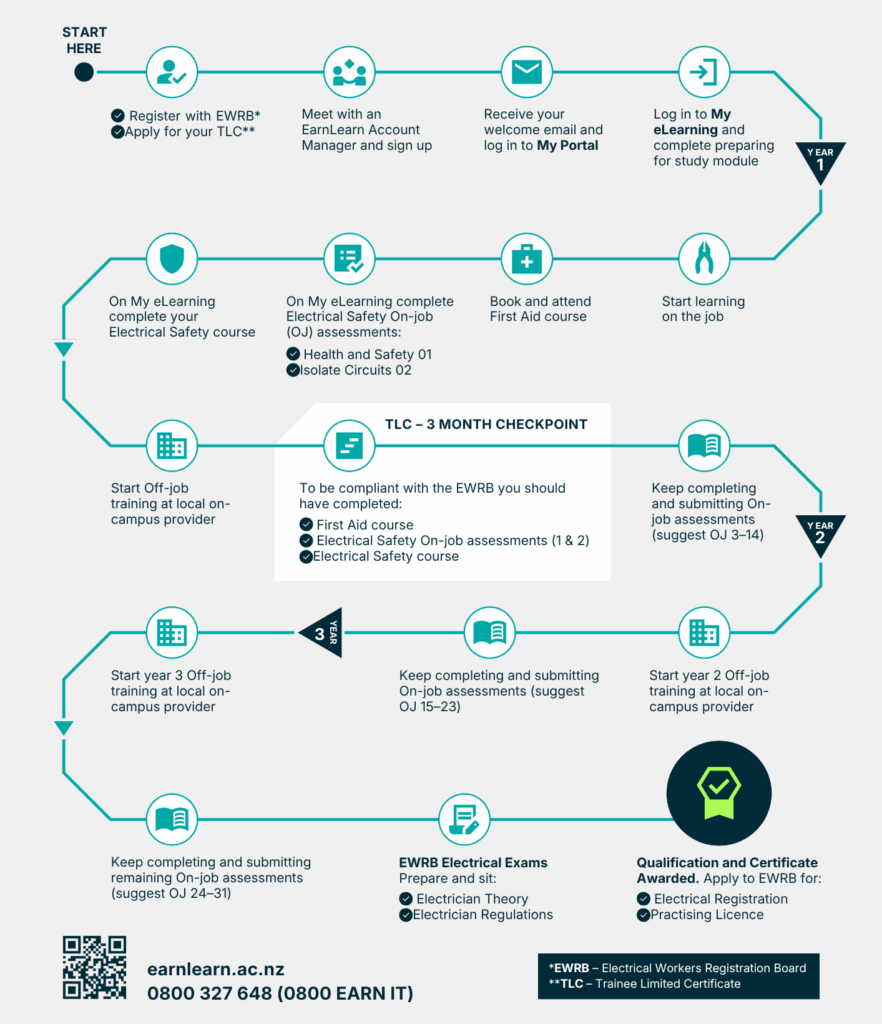
Your apprenticeship works towards the New Zealand Certificate in Electrical Engineering (Trade) (Level 4).
Training is a mix of on job learning and off job training with a local provider. Off job training builds the theory and regulatory knowledge that supports what you are doing on site, including electrical theory, safety, and regulations.
Your training is paced around your workplace exposure rather than a fixed classroom timetable.
Assessment is evidence based and completed as you work. You’ll collect on job evidence that shows you can safely and competently carry out electrical tasks under supervision.
A workplace verifier reviews and signs off your evidence, and EarnLearn assessors confirm it meets national unit standards. Regular evidence capture keeps your progress steady and avoids last minute pressure.
You’re supported throughout your apprenticeship by EarnLearn. Your Account Manager provides guidance, helps you plan assessments, and checks in regularly to make sure you’re on track.
If issues come up at work or with training, early support helps keep things moving and prevents delays.
As you complete training and assessments, you move steadily toward finishing your qualification.
Once all requirements are met, you can apply to the Electrical Workers Registration Board (EWRB) for registration and a practising licence, allowing you to work independently as a registered electrician.
Electrical apprenticeships are structured by qualification level and work pathway. Your training progresses as you build skills on the job, while your pathway reflects the type of electrical work you are gaining experience in. You can gain experience across more than one pathway over time, depending on your employer’s work and your on job exposure.
Understand what’s involved and how to move from interest to employment and training.
Electrical work is hands-on and safety focused. You’ll need to be reliable, comfortable working in a team and willing to learn on the job.
Show employers you’re work ready. Highlight relevant experience, practical skills, safety awareness and a positive attitude towards learning.
To begin an electrical apprenticeship, you’ll need to be employed by an electrical business and work under the supervision of a registered electrician.
Once employed, you, your employer and EarnLearn agree on your training plan, including on-job learning, off-job training and assessments.
Start building practical experience while completing your on-job and off-job training, with ongoing support from EarnLearn.
Electrical work is hands-on and safety focused. You’ll need to be reliable, comfortable working in a team and willing to learn on the job.
Show employers you’re work ready. Highlight relevant experience, practical skills, safety awareness and a positive attitude towards learning.
To begin an electrical apprenticeship, you’ll need to be employed by an electrical business and work under the supervision of a registered electrician.
Once employed, you, your employer and EarnLearn agree on your training plan, including on-job learning, off-job training and assessments.
Start building practical experience while completing your on-job and off-job training, with ongoing support from EarnLearn.
Understand how electrical training works, what’s involved, and how you progress from apprentice to registered electrician.
An electrical apprenticeship combines paid, on job work with structured off job training. You are employed by an electrical business and learn practical skills under the supervision of a registered electrician while completing theory training with an approved provider.
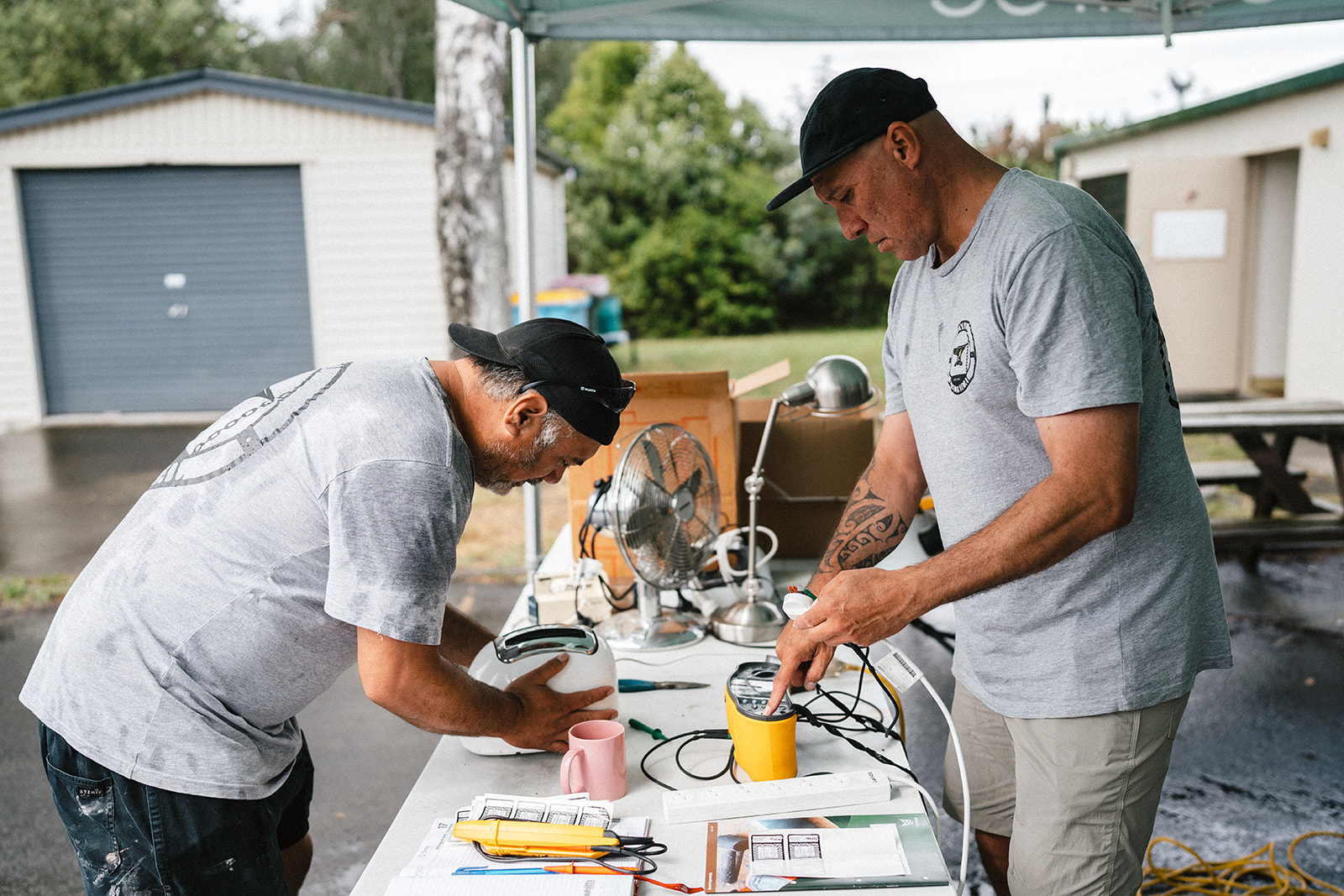
Most learning happens through real electrical work such as installing, testing, fault finding, and maintaining electrical systems. Your training is supported by on job assessments, regular progress check ins, and guidance from your EarnLearn Account Manager. The structure is designed to fit around real work, not full time classroom study.
Most electrical apprenticeships take around 3.5 to 4 years to complete, depending on your work exposure, training progression, and whether you have completed any prior study.
If you have already completed a relevant pre trade quaalification, your off job training time may be reduced. Progression is competency based, so steady on job experience and timely completion of assessments help keep things moving.
You will work towards the New Zealand Certificate in Electrical Engineering (Trade) (Level 4). This is a nationally recognised qualification and is the required trade qualification for electrical registration in New Zealand.
The apprenticeship includes both practical and theory unit standards and prepares you to sit the required Electrical Workers Registration Board exams as part of your pathway to becoming a registered electrician.
Your training is aligned to the type of electrical work your employer carries out. This may include:
Domestic and commercial electrical work such as homes, retail, and commercial buildings
Industrial electrical work such as machinery, motors, control systems, and industrial installations
Where required, arrangements can be made to help you gain the range of experience needed to complete your qualification.
You’re supported throughout the apprenticeship by an EarnLearn Account Manager. They check in regularly with you and your employer, help plan assessments, answer questions, and step in early if any issues arise.
Support is ongoing from sign-up through to completion, ensuring training stays aligned with workplace realities and industry standards.
Assessments are completed on the job using structured on job assessment booklets. You collect evidence as you work, such as completed tasks, job records, and supporting documentation.
When you are ready, a Te Pūkenga registered verifier reviews and signs off your work to confirm competency against national standards. Your EarnLearn Account Manager supports you with assessment planning, submission, and progress tracking throughout your apprenticeship.
Starting an electrical apprenticeship is a big decision. Whether you’re just exploring the pathway or already working in the industry, we’re here to help you understand how the apprenticeship works, what’s involved, and what your next step could be.
Understand how an electrical apprenticeship works and what’s expected on the job
Get clarity on on-job and off-job training, licensing requirements, and how progression works over time
Talk through your situation and map out practical, achievable next steps